A production-grade, multi-tenant cross-border remittance and payment-processing platform. Polyglot by intent. ISO 20022 native. Compliance as a product.
A four-layer real-time payment rail integrating with Israel's MASAV clearing system. End-to-end request processing under five seconds, message-queue backbone, dual XML/JSON adapter, and a layered architecture that keeps the regulated core sealed from the public edge.
Public-facing ingress. Accepts inbound payment requests, normalizes XML and JSON payloads through a dual adapter, validates schemas, and forwards onto the MQ backbone for downstream processing.
Three-tier AWS infrastructure-as-code provisioning the entire payment-gateway plane: VPC, RDS, Redis, ECS Fargate services, MQ broker, WAF, CloudFront, Route53, and Secrets Manager for operator credentials.
System of record. Multi-tenant payment processor that owns transaction state, operator credentials, idempotency, and the Flyway-managed schema. Consumes from MQ, applies business rules, persists to Postgres, emits onto the downstream queue.
The MASAV bridge. Translates engine events into clearing-system messages, manages HMAC + JWT auth, performs the live handshake with MASAV, and returns ack/nack back through MQ to the engine — all inside the five-second budget.
The public edge never speaks directly to vala-gate or MASAV. Every hop is a queue — buffering, retrying, and isolating failures so a slow clearing run never melts the ingress layer.
Clearing systems and legacy partners speak XML. Modern customer APIs speak JSON. One adapter normalizes both at the edge so every downstream layer sees a single, canonical envelope.
Israel's instant-payment expectation is sub-five-second confirmation. Every layer's budget is measured against it — adapter, MQ, engine, clearing — with timeouts and circuit breakers wired throughout.
Global Remit (GR) is built as a polyglot monorepo of 32 services, libraries, and applications. It moves money across operators — GCash, Thunes, RIA, MASAV — exposes ISO 20022 messaging, runs on AWS, and ships customer-, operator-, and back-office surfaces on web and mobile.
Clojure + Spring. Multi-tenant payment processing, operator credential management, Flyway-managed schema evolution. The system of record for every transaction.
Kotlin · Spring WebFlux · R2DBC. Speaks pacs.008, pain.013, pain.014 over HMAC + JWT. Translates engine state into the language of modern correspondent banking.
IMPA-compliant UAR XML generator (Hebrew RTL) plus a 184-configuration PII masking platform on EventBridge-scheduled ECS Fargate. Compliance shipped, not retrofitted.
FastAPI + Playwright. Records operator UI flows once, replays deterministically, falls back to an LLM only when the page changes. Replaces six-figure manual ops cost.
Customer apps, operator integrations, compliance flows, and reporting all converge on a single Clojure payment core and a Kotlin ISO 20022 bridge — running on three-tier AWS infrastructure-as-code.
A curated polyglot stack — each language chosen for its layer. Clojure for the engine. Kotlin for I/O. Rust for the hot path. Go for support APIs. TypeScript for surfaces. Python for ops and RPA.
A white-label cross-border remittance backbone for licensed money-transfer operators, neobanks, and corridor specialists. Customers don't rebuild ISO 20022, sanctions, KYC document capture, operator integrations, or compliance reporting — they wire into GR.
vala-gate + processor-gateway. For the MTO CTO: days, not quarters, to first transaction.
OCR-driven document verification, payment approval flows, sanctions automation. For the Compliance lead.
White-label app with biometric onboarding, OTP, corridor pricing. For the Product lead.
IMPA-ready UAR XML, PII masking for non-prod, sanctions automation. For Risk & Legal.
Replace manual operator-portal tasks with replayable flows. For the Ops manager.
Configurable report generation, analytics dashboards, regulator-ready exports.
Most challenger MTOs still hand-roll SOAP per corridor. We don't.
GCash, Thunes, RIA, MASAV already integrated. New corridors are configuration, not rewrites.
Masking, UAR, sanctions, KYC OCR are first-class — not retrofitted in year three.
The first viable answer to "the operator portal changed again" — a known seven-figure cost center.
Same engine, three first-party surfaces, no SaaS sprawl.
A real distributed trace of a single payment request, a map of the corridor portfolio, and a C4 Level-1 system-context view of how the platform sits among its users and external partners.
Zoom into the Global Remit Platform box: applications, services, and data stores — and the protocols they speak to each other and to external partners.
Zoom into the core engine: how an inbound payment request flows through validators, idempotency control, the transaction state machine, persistence, and outbound queueing — all inside a single Clojure / Spring process.
The full immediate-payment lifecycle as a UML sequence diagram — every actor lane, every message, every activation bar, every return — fitting inside the five-second end-to-end budget.
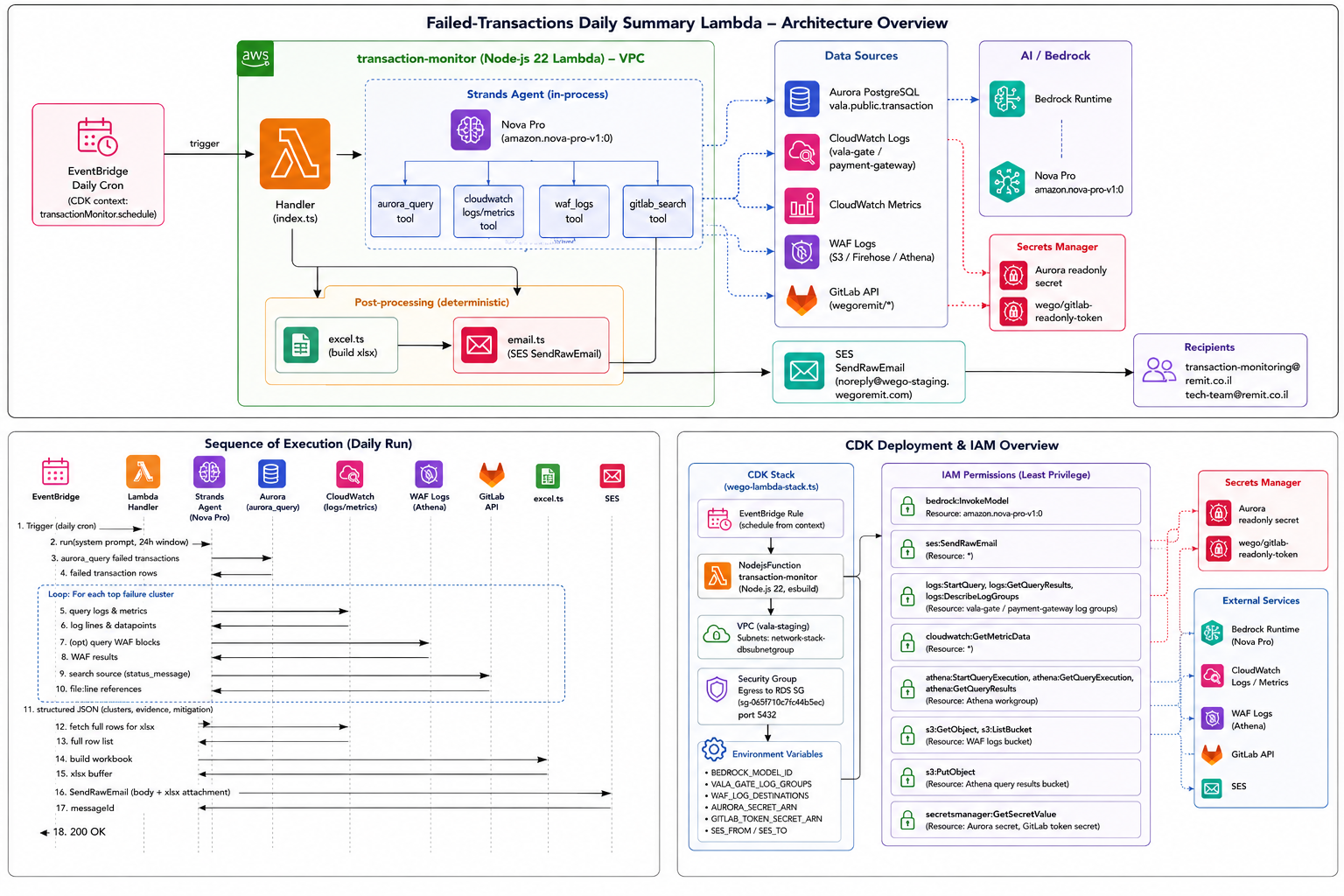
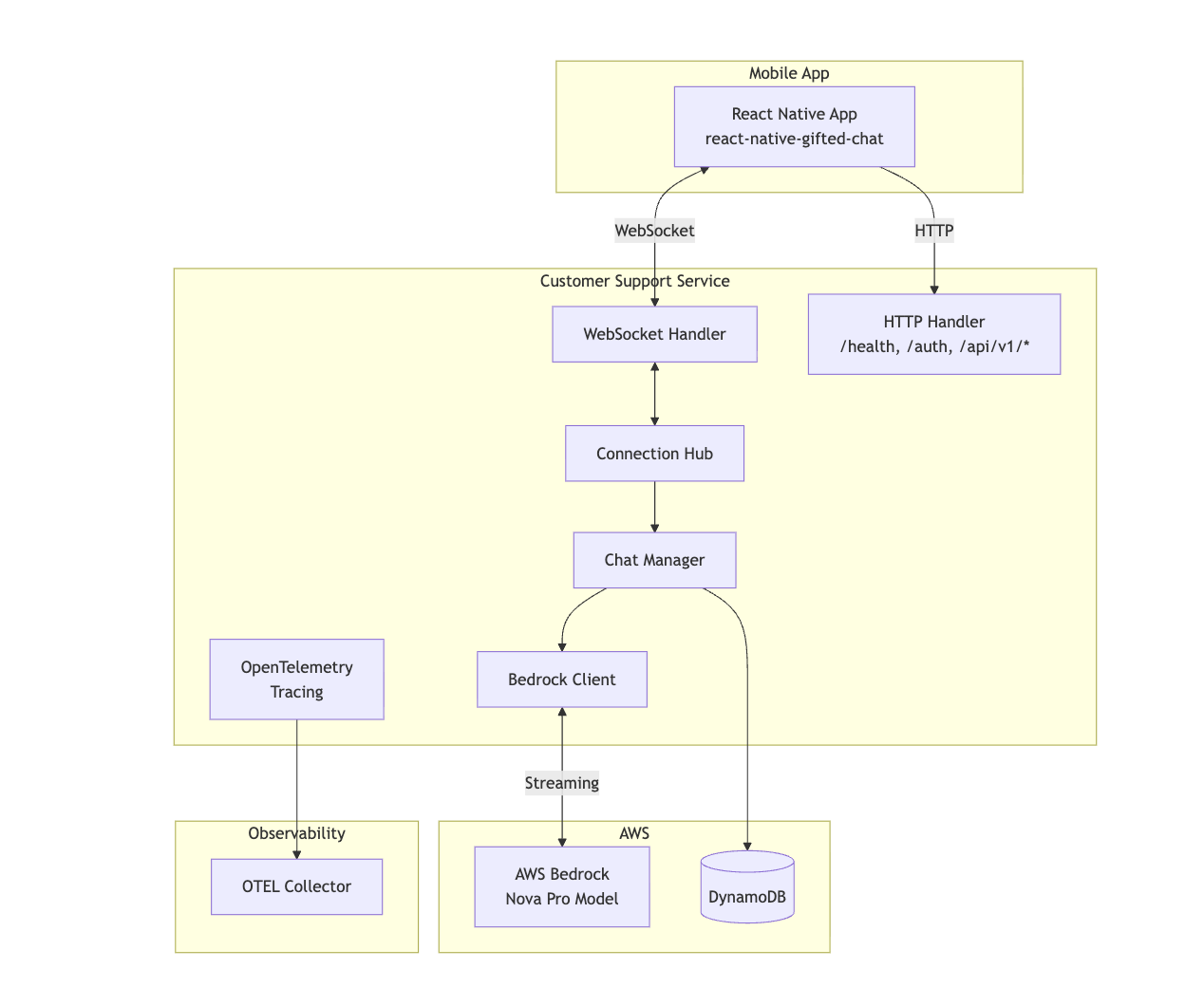
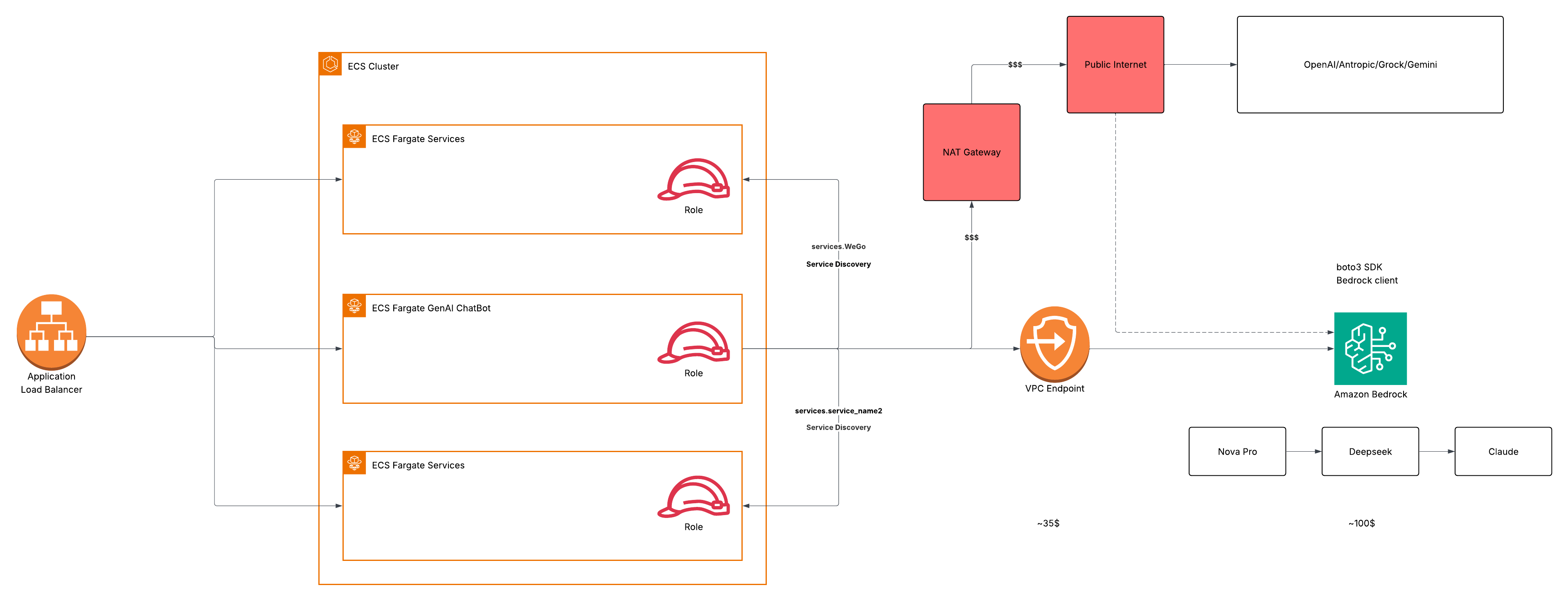
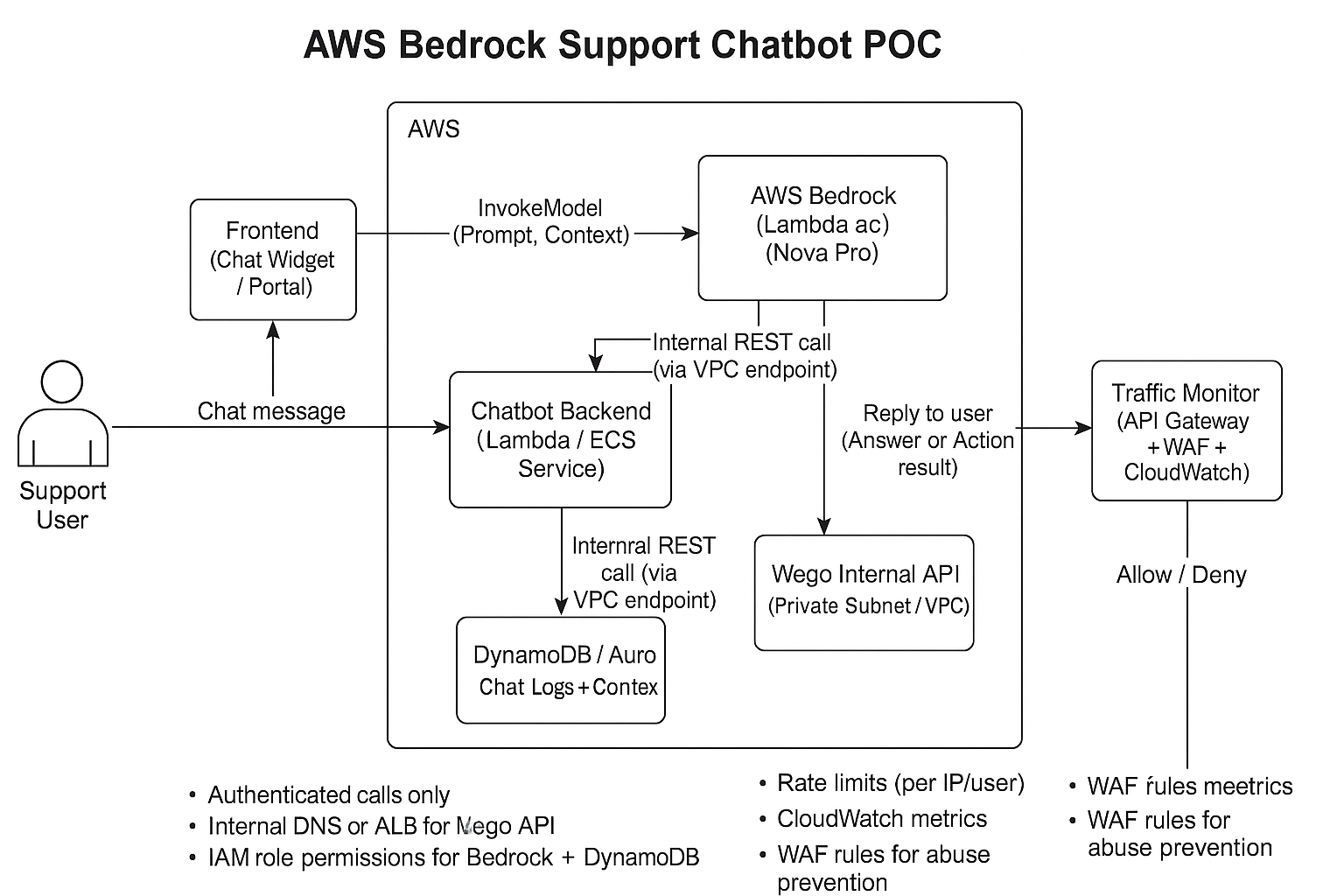
The diagrams below are pulled directly from production design documents — Lambda summary architecture, customer-support service, GenAI chatbot infrastructure, and the Bedrock support POC.


Cross-border remittance is plumbing in transition. ISO 20022 has stranded the mid-market. We have what they need, already shipped.
Annual cross-border remittance flow still gated by SWIFT-era plumbing, ad-hoc operator integrations, and compliance teams in spreadsheets. Challenger MTOs spend 18–24 months and $3–8M before moving their first dollar. Incumbents charge 5–7% spreads because the long tail can't compete on rails.
The ISO 20022 cut-over has stranded mid-market MTOs without resources to migrate. AI-driven KYC OCR is finally cheap enough to ship in onboarding. Stablecoin and traditional rails are converging — and they reward platforms with clean ISO 20022 messaging.
Global Remit is the payments-platform-as-a-product for MTOs: ISO 20022-native engine, multi-operator integrations, compliance pack, and customer-facing surfaces — deployed on AWS in weeks rather than years.
32 services across nine languages, three environments, full IaC. Not a slide — a running system.
Institutional knowledge of where regulated data lives. The hardest part of compliance is already done.
FX, fraud intake, KYC notifications — revenue-adjacent surface ready to monetize.
GCash, Thunes, RIA, MASAV. Each integration is six figures of avoided sunk cost for a buyer.
We ship regulated workloads in non-trivial jurisdictions — not just English-language demoware.
Operator portal changed? Replay the recording. LLM only when the recording fails. A real moat.
Seed / Series A to fund (1) sales-led GTM with two design-partner MTOs, (2) a stablecoin settlement corridor on USDC, (3) productizing the compliance suite as a standalone SKU, and (4) shipping the mobile SDK as an embeddable component for partner apps.
Designed and shipped a polyglot remittance platform spanning nine languages across 32 projects, 17 Lambdas, three environments, and six+ microservices.
Built the multi-tenant payment processor backing the corridor portfolio and operator integrations on AWS ECS.
Designed the WebFlux/R2DBC bridge translating engine state into pacs/pain messages with HMAC + JWT.
Shipped IMPA UAR XML generator (Hebrew RTL) and a 184-config PII masking platform on ECS Fargate.
Playwright record-once-reuse with LLM self-healing fallback — replacing six-figure manual ops cost.
Biometric and OTP onboarding, operator integrations, end-to-end Maestro UI test coverage.
17 functions covering FX, fraud intake, URL shortening, KYC notifications — deployed via CDK.